Ship frontend SaaS flows with realistic data
before backend is ready.
For internal tools, customer dashboards, and stateful product flows: define a schema, generate seeded relational data, and connect live CRUD endpoints in minutes.
- Model schemas for internal tools, dashboards, or customer flows
- Create seeded relational data you can regenerate
- Test filters, edits, and CRUD flows on live endpoints
Best for cold starts: test a schema, inspect runtime routes, then claim the workspace when you want to keep going.
Mock data helps with screens, not full product flows
The breakage shows up as soon as a second screen needs joins, filters, edits, or time-based data.
The hidden cost of placeholder data
- Velocity drops: teams redo UI integration work.
- QA confidence drops: failed cases are hard to replay.
- Demo quality drops: screens look real, behavior does not.
Problem 01
Fixtures drift quickly
Static JSON stops matching real behavior as flows grow.
Problem 02
Backend timelines block frontend
UI delivery slows when APIs and data are not ready.
Problem 03
QA data is hard to reproduce
Without deterministic seeds, bug cases are hard to recreate.
Core capabilities in one place
Schema design, data generation, runtime access, and team controls.
Schema modeling + immutable versions
Define tables and relations, then publish versions sources can pin to.
- Visual editing and AI schema creation
- Version history with stable refs
- Per-source schema pinning
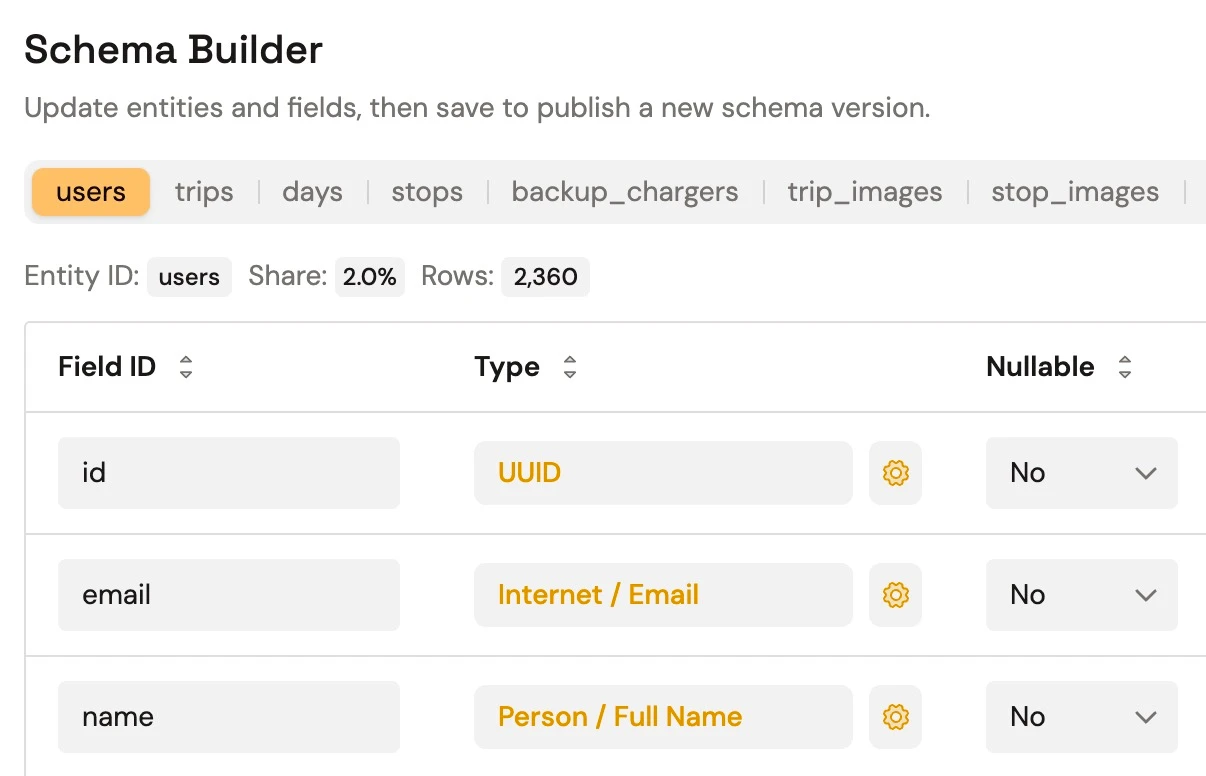
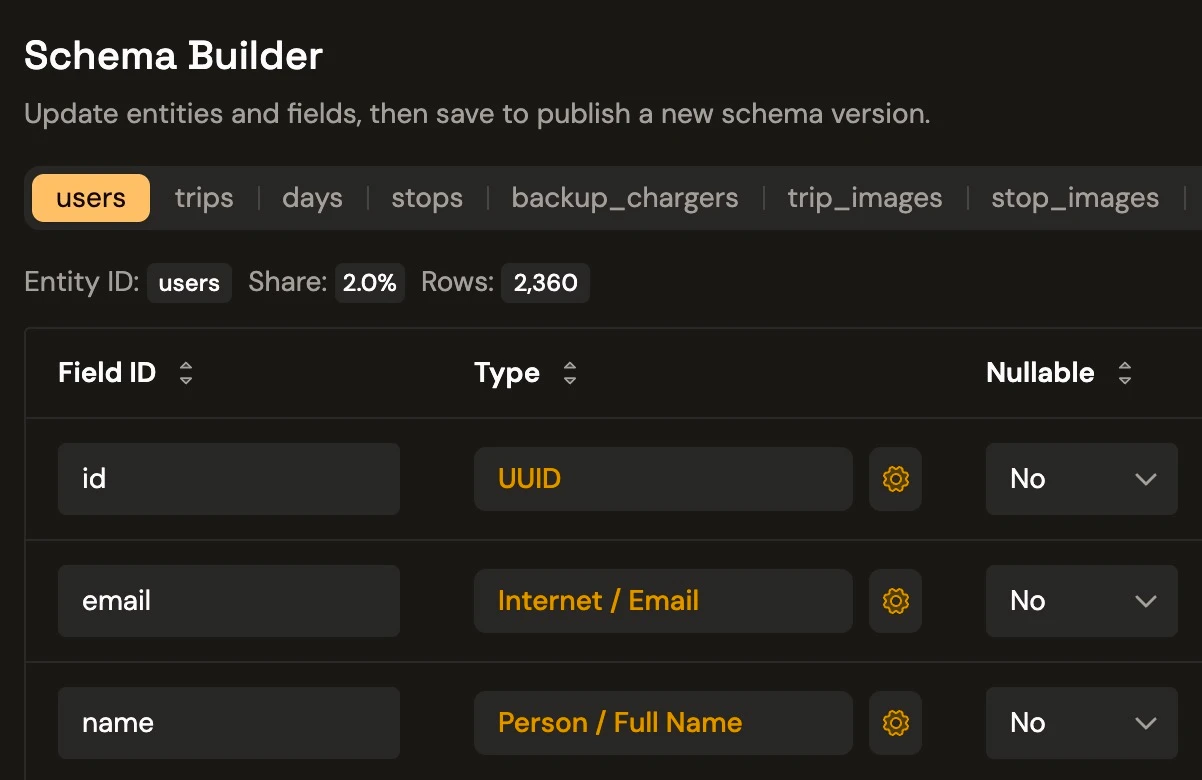
Schema editor preview
users
id, email, created_at
orders
id, user_id, total
subscriptions
id, user_id, status
Placeholder: replace with schema builder screenshot.
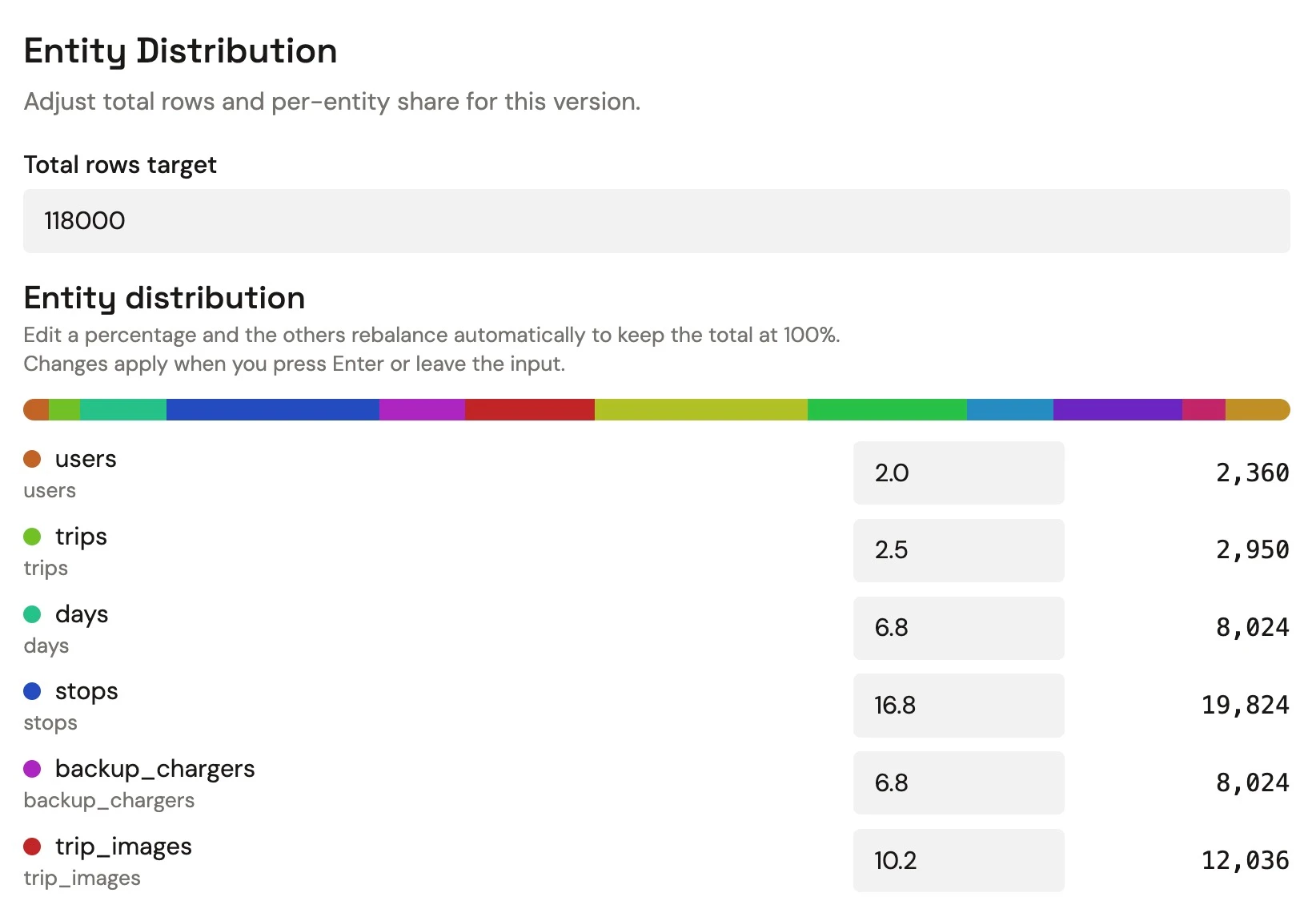
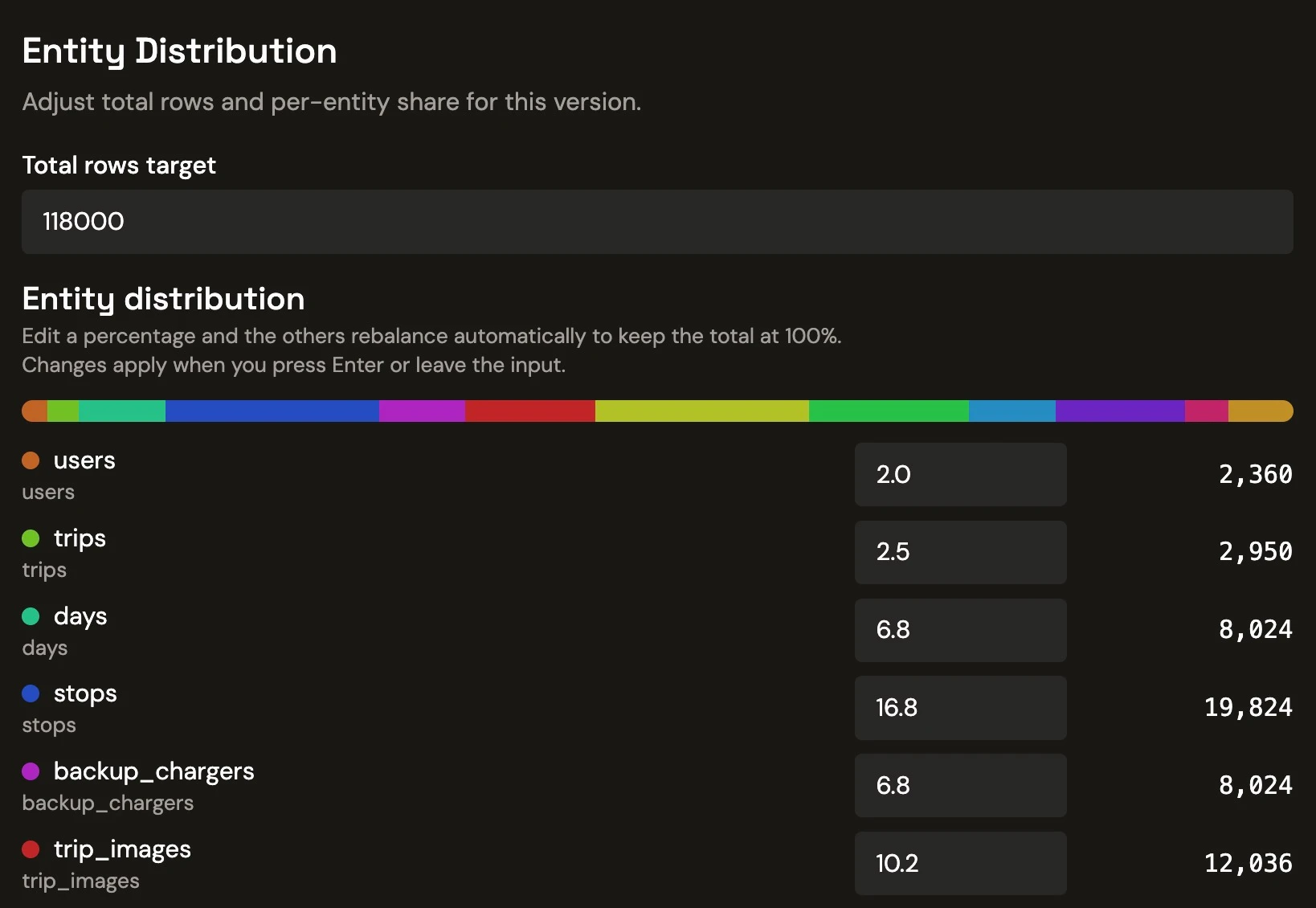
Seeded generation control
Set row count, locale, timezone, and seed for reproducible data.
- Deterministic regeneration with seeds
- Row distribution per entity
Generation controls
Runtime API + key auth
Each source has CRUD endpoints and source-level API key access.
- GET, POST, PATCH, DELETE per table
- `x-api-key` runtime authentication
Runtime endpoint
/api/runtime/:sourceId/:tableTeam workflows
Work together with role access, invites, and usage visibility.


Direct Postgres access
Connect your BI tools, scripts, and internal dashboards to source data with familiar Postgres query workflows.
'%3e%3crect%20width='600'%20height='600'%20rx='80'%20fill='%231A1816'%20style='fill:%231A1816;fill:color(display-p3%200.1020%200.0941%200.0863);fill-opacity:1;'/%3e%3cpath%20d='M303.4%20475.4C271%20475.4%20242.4%20469.6%20217.6%20458C192.8%20446.4%20173.4%20429.8%20159.4%20408.2C145.4%20386.6%20138.4%20360.6%20138.4%20330.2V313.4H216.4V330.2C216.4%20355.4%20224.2%20374.4%20239.8%20387.2C255.4%20399.6%20276.6%20405.8%20303.4%20405.8C330.6%20405.8%20350.8%20400.4%20364%20389.6C377.6%20378.8%20384.4%20365%20384.4%20348.2C384.4%20336.6%20381%20327.2%20374.2%20320C367.8%20312.8%20358.2%20307%20345.4%20302.6C333%20297.8%20317.8%20293.4%20299.8%20289.4L286%20286.4C257.2%20280%20232.4%20272%20211.6%20262.4C191.2%20252.4%20175.4%20239.4%20164.2%20223.4C153.4%20207.4%20148%20186.6%20148%20161C148%20135.4%20154%20113.6%20166%2095.6C178.4%2077.2%20195.6%2063.2%20217.6%2053.6C240%2043.6%20266.2%2038.6%20296.2%2038.6C326.2%2038.6%20352.8%2043.8%20376%2054.2C399.6%2064.2%20418%2079.4%20431.2%2099.8C444.8%20119.8%20451.6%20145%20451.6%20175.4V193.4H373.6V175.4C373.6%20159.4%20370.4%20146.6%20364%20137C358%20127%20349.2%20119.8%20337.6%20115.4C326%20110.6%20312.2%20108.2%20296.2%20108.2C272.2%20108.2%20254.4%20112.8%20242.8%20122C231.6%20130.8%20226%20143%20226%20158.6C226%20169%20228.6%20177.8%20233.8%20185C239.4%20192.2%20247.6%20198.2%20258.4%20203C269.2%20207.8%20283%20212%20299.8%20215.6L313.6%20218.6C343.6%20225%20369.6%20233.2%20391.6%20243.2C414%20253.2%20431.4%20266.4%20443.8%20282.8C456.2%20299.2%20462.4%20320.2%20462.4%20345.8C462.4%20371.4%20455.8%20394%20442.6%20413.6C429.8%20432.8%20411.4%20448%20387.4%20459.2C363.8%20470%20335.8%20475.4%20303.4%20475.4Z'%20fill='%23FCFCFC'%20style='fill:%23FCFCFC;fill:color(display-p3%200.9882%200.9882%200.9882);fill-opacity:1;'/%3e%3cline%20x1='132.23'%20y1='524.001'%20x2='482.22'%20y2='526.593'%20stroke='%23FFC068'%20style='stroke:%23FFC068;stroke:color(display-p3%201.0000%200.7529%200.4078);stroke-opacity:1;'%20stroke-width='62'/%3e%3c/g%3e%3cdefs%3e%3cclipPath%20id='clip0_51_16'%3e%3crect%20width='600'%20height='600'%20rx='80'%20fill='white'%20style='fill:white;fill-opacity:1;'/%3e%3c/clipPath%3e%3c/defs%3e%3c/svg%3e)
Synthbrew
From idea to live API in minutes
Define the model, generate deterministic data, connect your frontend, and ship product flows without waiting on backend timelines.
Define your schema
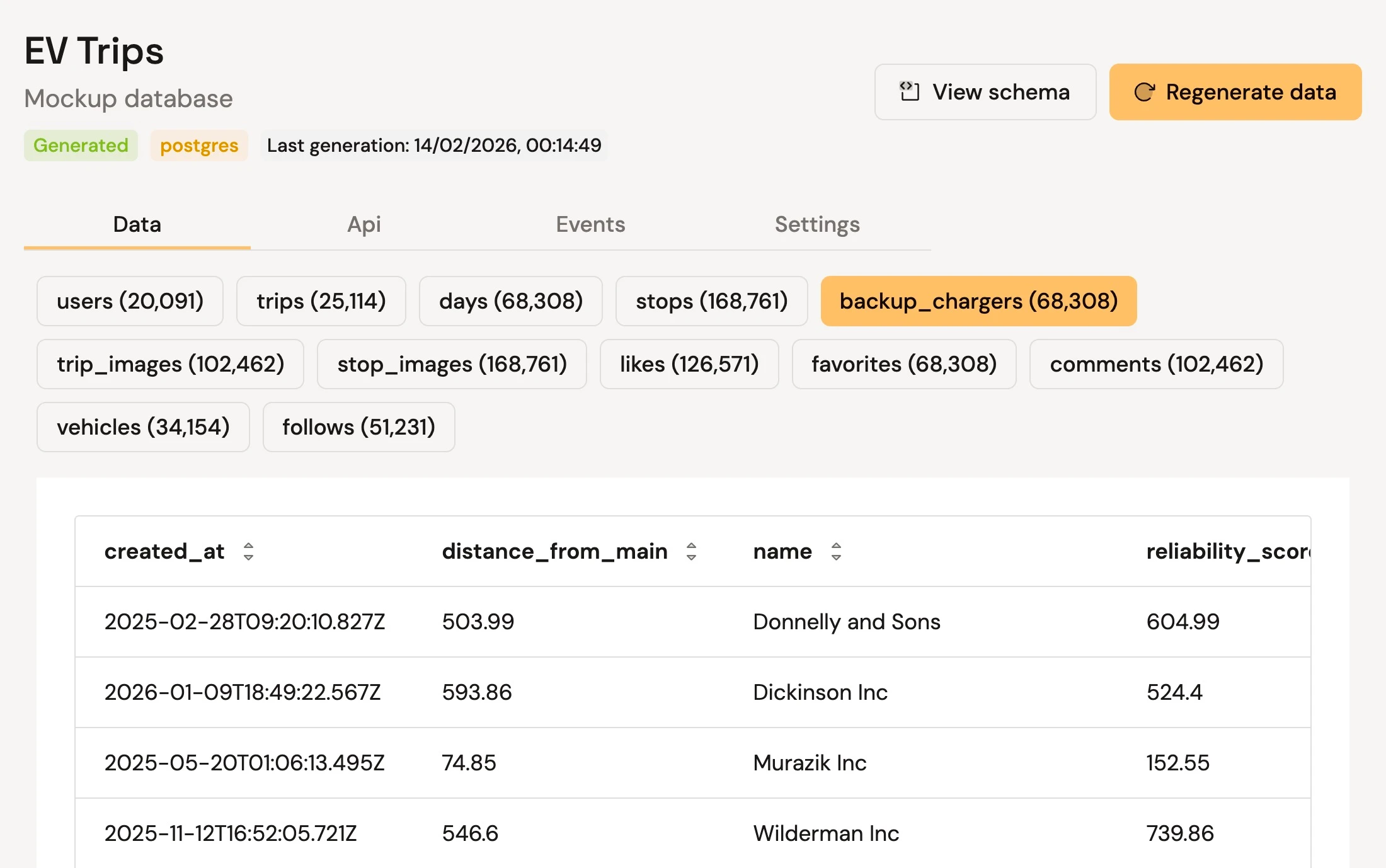
Start in the visual editor or prompt AI. Synthbrew builds a complete schema with your entities and relations.
Generate seeded data
Pick row counts and keep deterministic seeds so each regeneration stays realistic and repeatable for testing.
Connect your frontend
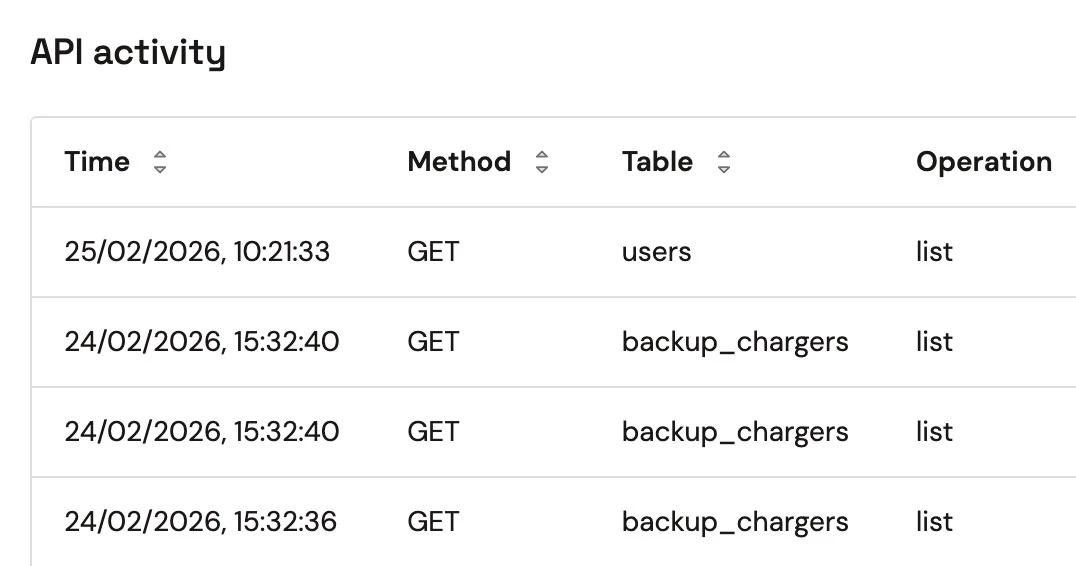
Use runtime CRUD endpoints immediately. Requests are authenticated with x-api-key source keys.
Ship your prototype
Demo complete user flows with realistic data now, then swap endpoints when your production backend is ready.
Where teams use Synthbrew
Frontend delivery before backend completion
Ship flows and polish UX while backend APIs are in progress.
Reproducible QA/test environments
Regenerate known states with the same seed to verify fixes.
Production-like demos
Show realistic data and interactions without brittle hardcoded mocks.
Why not use static generators or JSON files?
| Capability | Synthbrew | Static data generators |
|---|---|---|
| Live CRUD endpoints | Built in | Not available |
| Seeded regeneration | Deterministic | Manual |
| Schema versioning | Immutable versions | Ad hoc only |
| Team permissions + invites | Role-based + scoped | Usually absent |
See the workflow with your own schema before you commit to setup.
Generate realistic tables, inspect runtime routes, and claim the workspace when you want to continue in Synthbrew.